
America’s recurring foreign-policy failure is the abandonment of self-determination: the moment we stop defending a people’s right to choose and begin choosing for them.
This is not merely a moral distinction. It is the strategic difference between a durable ally and a dependent regime, between a coalition sustained by consent and an occupation sustained by force. A government manufactured abroad may survive while foreign money and soldiers remain. Only a government with internal legitimacy can endure on its own.
The Wilsonian principle is therefore simple: legitimate government rests on the consent of the governed. Democracy should spread through example, political freedom, diplomacy, and voluntary alliances—not through coups, occupations, or governments manufactured abroad. Military strength remains necessary to deter aggression and defend nations against conquest. It is not a license to select their rulers.
That definition also requires honesty about the name. “Wilsonianism” has often included a paternalistic, interventionist branch, and Woodrow Wilson himself violated self-determination in practice—most starkly through the occupation of Haiti and the manipulation of its political institutions. This project does not inherit those acts simply because Wilson committed them. It draws the line through his contradiction: it carries forward self-determination, collective security, open diplomacy, and international cooperation while rejecting the coercive belief that America may govern another people for their own supposed good.
Not every intervention is the same.
An honest doctrine must distinguish collective defense from political control. Defeating an aggressor, rescuing people from an imminent massacre, striking a direct threat, overthrowing an elected government, and invading to install a new political order are different acts with different legal and moral foundations. Treating them as interchangeable produces bad history and worse policy.
This essay therefore does not argue that every American use of force was wrong, that every displaced ruler was democratic, or that foreign powers never threaten free societies. It argues something narrower and more defensible: America repeatedly injured itself when it denied other peoples political agency and mistook the removal of a government for the creation of a legitimate replacement.
The line is political agency.
Four questions clarify the difference. Did the people choose the government, however imperfectly? Is American force defending them from external aggression or redesigning their internal politics? Is the mission authorized, collective, limited, and connected to a realizable objective? Does the endpoint restore independent self-government—or leave a state whose survival depends on continuing American control?
Under this test, defending a sovereign nation from invasion supports self-determination. Overthrowing its elected government defeats it. Stopping an immediate atrocity may be justified, but protection is not a blank check for regime engineering. Removing a dictator may end a tyranny, but it does not confer legitimacy on whatever foreign planners assemble afterward.
Self-determination also does not guarantee that every society will immediately choose liberal democracy—or choose leaders Washington likes. People can elect corrupt, illiberal, socialist, nationalist, or anti-American governments. America may answer abuses with diplomacy, lawful sanctions, support for independent institutions, and refuge for the persecuted. The principle loses all meaning, however, if another country’s choice remains valid only until the United States dislikes its result.
Self-determination is not passivity. It determines what American strength is for.
Vietnam first appealed to the democratic promise.
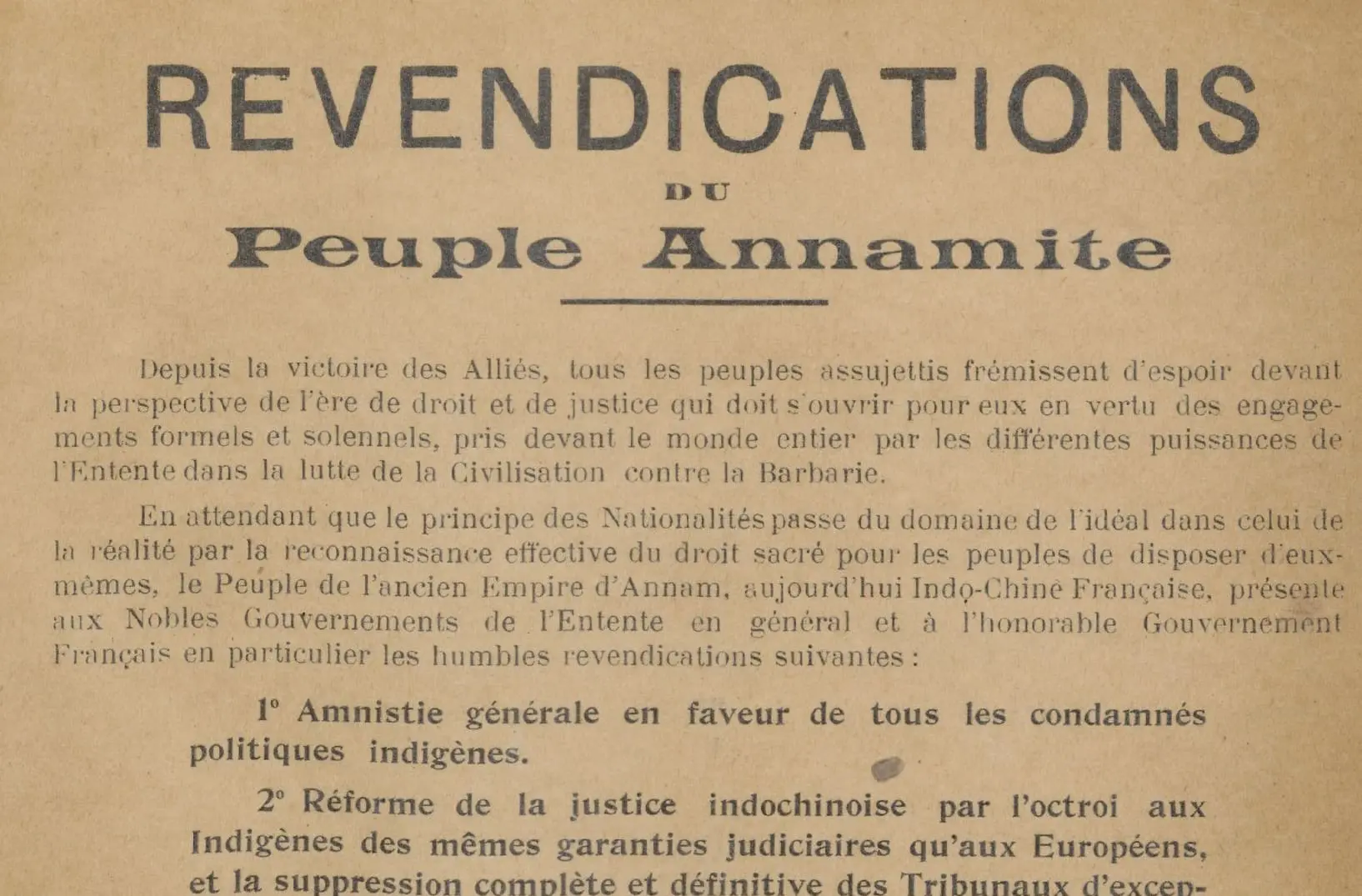
In 1919, Nguyễn Ái Quốc—the future Hồ Chí Minh—submitted a petition to Secretary of State Robert Lansing during the Paris Peace Conference. Inspired by the language of self-determination, the petition did not demand immediate independence or communist revolution. It asked for legal equality, freedom of speech and association, education, representative participation, and an end to arbitrary colonial rule.
He received a note saying that the petition would be shared with President Wilson, but no substantive response followed. There is no firm basis for claiming that Hồ Chí Minh personally met Wilson. The documented fact is both more modest and more revealing: Vietnamese nationalists appealed to the Wilsonian promise through peaceful political channels, and the promise was not applied to them.
Self-determination cannot remain a slogan reserved for peoples whose choices powerful nations already approve.
No honest history can claim that one answered petition would certainly have prevented the Vietnam War. French colonial repression, Japanese occupation, Vietnamese political conflict, the First Indochina War, the Cold War, partition, and decisions by several governments all shaped what followed. But ignoring Vietnamese aspirations helped discredit the democratic route. By the time the United States committed itself to war, it was trying through military power to create the legitimacy that only political consent could supply.
Iran was not an omission. It was an overthrow.
In 1953, the United States and Britain helped remove Iranian Prime Minister Mohammad Mossadegh after his government nationalized the country’s oil industry. Mossadegh had come to office through Iran’s parliamentary system. His government was nationalist and possessed democratic legitimacy, but Iran was not a settled modern liberal democracy. By 1953, Mossadegh had obtained emergency powers, held a deeply disputed referendum, dissolved the Majlis, and entered a genuine constitutional struggle with the Shah. Those facts complicate the history; they do not excuse a foreign covert operation to decide its outcome.
The CIA’s own record described the objective without euphemism: bring down Mossadegh’s government and replace it with a pro-Western government under the Shah. The operation applied pressure to the Shah, coordinated opposition factions, conducted propaganda and a “war of nerves,” cultivated support inside the military, and covertly contributed to the forces that accomplished Mossadegh’s removal.
This was defended as Cold War necessity. In practice, America subordinated an Iranian political struggle to Western control and oil interests, then supported the Shah as his rule became increasingly authoritarian. The coup did not by itself cause the 1979 revolution or every conflict that followed. It did, however, burden America with responsibility for destroying a democratic opening and gave later opponents enduring evidence that American professions of freedom were conditional.
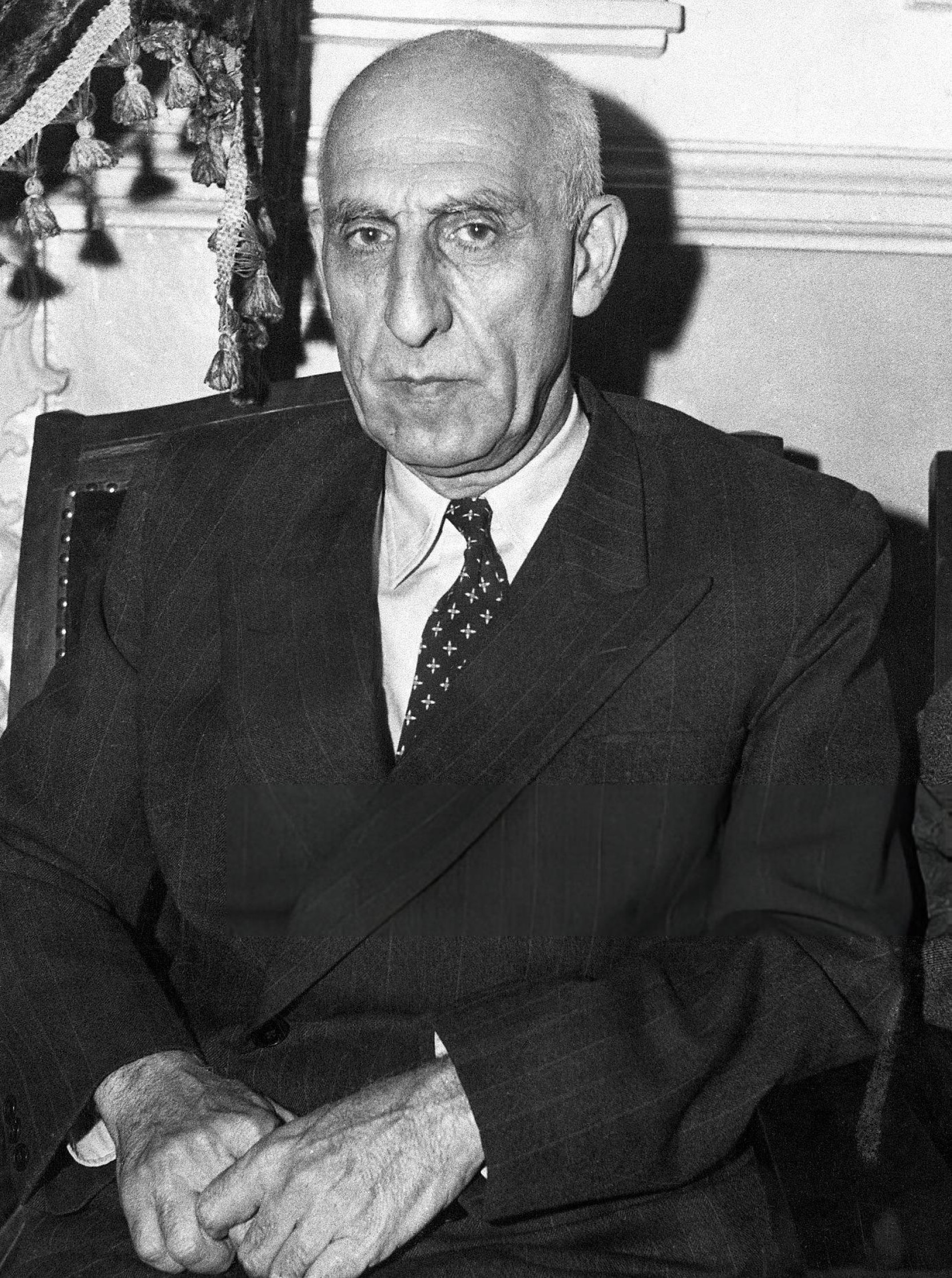
In Iran, America did not save democracy from communism. It sacrificed democratic legitimacy to the fear that Iran might make choices Washington could not control.
Containment became a permission slip.
The danger of Soviet expansion was real. Communist governments committed repression and pursued power abroad. But a serious threat does not make every response wise—or democratic. Once “fighting communism” became sufficient justification for overturning elections, manipulating civil society, or supporting compliant authoritarians, the United States began confusing anti-communism with freedom.
Those are not the same thing. A dictatorship does not become democratic because it is friendly to Washington. A coup does not become constitutional because the displaced leader leaned left. And a foreign population does not owe legitimacy to a government merely because American strategists consider it useful.
The pattern extended far beyond Iran.
Guatemala, 1954: Jacobo Árbenz was an elected president pursuing land reform. The CIA trained and supported Carlos Castillo Armas’s force, applied propaganda and diplomatic pressure, used CIA contract pilots for airstrikes, and cultivated Guatemalan officers. Árbenz resigned, and American officials helped broker the arrangement that installed Castillo Armas. A campaign presented as anti-communist displaced an elected government and helped end Guatemala’s democratic opening.
Congo, 1960–61: Patrice Lumumba became prime minister through the parliamentary politics of a newly independent and deeply unstable state. American officials feared Soviet influence; the CIA pursued his political removal and developed an assassination plot. Accuracy matters here: the U.S. Senate’s Church Committee found that CIA officers were not involved in Lumumba’s eventual killing and lacked advance knowledge of his transfer to Katanga. The documented plot and campaign against him remain indefensible without inventing direct responsibility for the murder.
Chile, 1970–73: Salvador Allende won a plurality and was constitutionally confirmed by Chile’s Congress. President Nixon ordered covert efforts to prevent his confirmation, and the United States later funded opposition activity and applied pressure against his government. But the evidence does not justify the simplified claim that the CIA directly carried out the September 1973 military coup. The stronger, accurate charge is that Washington worked against a constitutional outcome because it rejected the electorate’s choice, then accepted a dictatorship as preferable to an elected Marxist government.
Cuba and the Dominican Republic: the failed Bay of Pigs invasion and later Operation Mongoose sought to remove Fidel Castro, while the 1965 intervention in the Dominican Republic expanded beyond protecting American lives to an unannounced mission of preventing “another Cuba.” These cases show how easily anti-communism converted political preference into military or covert authority.
The record is damaging enough without exaggeration. Precision separates historical accountability from propaganda.
Iraq exposed the regime-change fallacy.
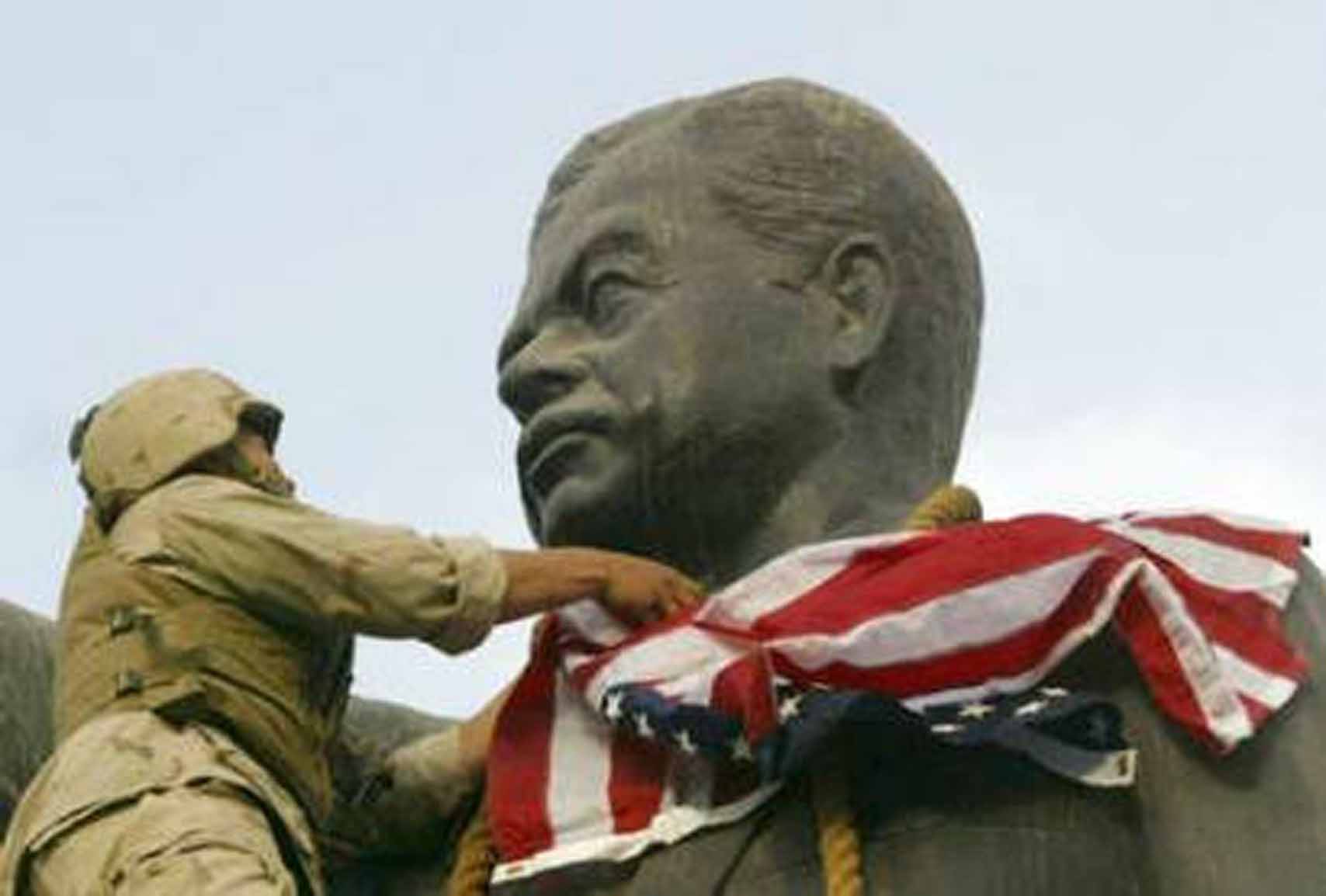
Saddam Hussein was not a democratic leader. He headed a murderous dictatorship, invaded neighboring states, used chemical weapons, and brutally repressed Iraqis. Removing him therefore cannot be described as overthrowing democracy. The Iraq failure belongs in this history for a different reason: the United States treated the destruction of a dictatorship as if it could, by itself, produce a legitimate democratic order.
The 1991 Gulf War demonstrates the alternative. Iraq had invaded and annexed Kuwait. The United States assembled a thirty-four-nation coalition, obtained congressional and United Nations authorization, expelled the aggressor, restored Kuwaiti sovereignty, and stopped without turning the liberation of Kuwait into an occupation of Iraq. Whatever criticisms can be made of the war and its aftermath, its central purpose was collective defense—not forced political conversion.
The 2002 authorization for war rested heavily on claims that Iraq possessed or was developing weapons of mass destruction, supported terrorism, and posed a continuing threat. Postwar investigations found that major public claims exceeded or contradicted the available intelligence, while the Iraq Survey Group found no stockpiles of the kind used to sell the urgency of invasion. The Bush administration also explicitly promised that military victory would place Iraq on a path to self-government and make democratic freedom an example for the Middle East.
The invasion removed Saddam Hussein’s brutal dictatorship and therefore removed a barrier to political choice. That fact matters: Iraq’s present constitutional order could not have existed under Saddam. But military force created an opening, not democratic legitimacy. With extensive American and international assistance—and at immense sacrifice by American service members and Iraqi citizens—Iraqis themselves gave the new order what legitimacy it possesses by debating and ratifying a constitution, holding repeated competitive elections, serving in public institutions, organizing, protesting, and continuing to participate despite violence. Those achievements are real and should neither be minimized nor credited solely to Washington.
But liberation from a dictator and the construction of a legitimate democratic state are not the same operation. Occupation policies, institutional dissolution, insurgency, sectarian warfare, mass displacement, and the rise of al-Qaida in Iraq imposed devastating costs and left Iraqi democracy constrained by corruption, militias, foreign influence, and weak rule of law. The lesson is not that nothing good followed Saddam’s removal. It is that the courage of those who served—and the democratic work of Iraqis—cannot transform preventive invasion into a reliable method for engineering democracy. A beneficial outcome in one dimension does not, by itself, prove that war was necessary, wisely designed, or repeatable as a foreign-policy doctrine.
Afghanistan and Libya require their own distinctions.
The initial intervention in Afghanistan followed the September 11 attacks and the Taliban’s harboring of al-Qaida. It was not equivalent to the elective invasion of Iraq or the overthrow of an elected government. The strategic error emerged as a counterterrorism mission expanded into a twenty-year attempt to build a centralized state on timelines and assumptions detached from Afghan political realities. The Special Inspector General for Afghanistan Reconstruction concluded that the United States repeatedly struggled to develop a coherent strategy, understand local context, build sustainable institutions, and recognize the scale of the undertaking.
Libya in 2011 began differently again: a domestic uprising, an imminent threat to Benghazi, an Arab League appeal, a United Nations mandate to protect civilians, and a NATO coalition. President Obama expressly said that expanding the military mission into forced regime change would be a mistake. Yet NATO intervention helped rebels defeat Qaddafi, the regime collapsed, and the international effort did not establish a durable postwar order. Libya illustrates a hard lesson rather than a simple equivalence: even intervention with multilateral authority and humanitarian purpose can outrun its mandate and leave responsibility for consequences its planners have not prepared to manage.
The strategic cost was recurring American failure.
Abandoning self-determination created a recurring trap. Intervention generated resistance; resistance was treated as proof that greater intervention was necessary; escalating commitments consumed lives, money, credibility, and attention. America became associated not with the right of peoples to choose, but with the survival of regimes dependent on American power.
Vietnam ended with the 1973 American withdrawal and the 1975 collapse of the government Washington had spent decades supporting. Iran’s monarchy fell in a revolution that produced a hostile Islamic Republic. Iraq and Libya remained scarred by violent fragmentation; the Afghan republic collapsed as American forces departed. These outcomes were not identical, and none had a single cause. Yet all reveal the strategic weakness of believing external power can substitute for internal legitimacy.
A nation can destroy a government. It can arm a faction, win a battle, or occupy a capital. What it cannot manufacture from outside is durable democratic consent.
The old failures have become a present vulnerability.
The bill for decades of strategic indiscipline is now arriving. Every unnecessary theater competes for aircraft, ships, interceptors, precision weapons, intelligence, money, diplomatic attention, and public patience. Every failed promise makes the next coalition harder to hold. Every government abandoned after depending on American power gives allies reason to question our endurance. Every broken country gives adversaries a grievance to amplify and a vacuum to enter.
America’s adversaries do not need to defeat the United States everywhere at once. They benefit when we divide ourselves, exhaust our arsenal, distrust our partners, and scatter our attention across conflicts without achievable political ends. The U.S. intelligence community warns that cooperation among China, Russia, Iran, and North Korea increases their resilience, raises the risk that conflict with one could involve another, and creates pressure across several regions at once. The 2026 National Defense Strategy describes the same danger as a “simultaneity problem.”
That does not prove that earlier interventions alone produced today’s security environment. China’s rise, Russia’s aggression, Iran’s regional ambitions, nuclear proliferation, technology, trade, and decisions made by allies and adversaries all matter. But interventionism weakened the position from which America must now confront those challenges. It spent strength without reliably producing legitimacy.
The credibility damage is especially dangerous. When Washington invokes sovereignty in Ukraine after violating it elsewhere, adversaries point to the contradiction. Their propaganda is self-serving; Russia’s invasion does not become lawful because America invaded Iraq. But hypocrisy gives false equivalence an audience. The answer is not to surrender the principle. It is to apply it consistently enough that the distinction between defending sovereignty and destroying it becomes undeniable.
A return to principle is not isolationism.
Rejecting coups and regime-change wars does not mean retreating from the world. A principled America should maintain overwhelming defensive capacity, invest in technology and munitions, stand firmly with treaty allies, oppose conquest, protect open navigation, and organize democracies against coercion. That is collective strength.
That means a strong NATO, because sovereign democracies have chosen collective defense. It means supporting nations resisting conquest, because an invader cannot be allowed to veto their future. It means a deep arsenal, resilient industry, superior intelligence and artificial intelligence, secure navigation, and alliances capable of deterring war before it begins.
But it also means respecting the distinction between defending a people’s right to choose and choosing for them. Alliances entered by sovereign nations reinforce self-determination. Covertly replacing an elected government negates it. Defending a country against invasion protects political agency. Invading a country to redesign its politics attempts to seize that agency.
A usable doctrine follows: no covert overthrow of elected governments; no preventive war merely to impose a preferred regime; no claim that elections count only when their winners align with Washington; no open-ended occupation disguised as democratic instruction. Force should require a direct defense, treaty obligation, or extraordinary and lawful protective necessity—with clear objectives, democratic authorization, allied burden-sharing, and an honest plan for what follows.
The core argument: America is strongest when its power protects the ability of peoples and nations to choose their own future. It fails when it confuses domination with leadership, regime removal with democracy, or permanent intervention with resolve. Democracy spreads through legitimacy and example. Alliances defend it. Deterrence preserves the peace in which it can grow.
Sources & assessments
National Archives · DocsTeachNguyễn Ái Quốc’s 1919 Petition to Robert Lansing ↗U.S. Department of StateU.S. Invasion and Occupation of Haiti, 1915–1934 ↗U.S. Department of StateHistory of U.S. Recognition and Relations with Vietnam ↗National ArchivesThe Pentagon Papers ↗U.S. Department of State · FRUSCIA Memorandum on the Campaign to Remove Mossadegh ↗CIA Freedom of Information Act Reading RoomThe Fall of Iranian Prime Minister Mohammad Mossadegh ↗U.S. Department of State · FRUSContemporary CIA Assessment of Iran’s Constitutional Crisis ↗U.S. Department of State · FRUSOfficial Record of Operation PBSUCCESS in Guatemala ↗U.S. Department of State · FRUSLumumba’s Death and the Church Committee Findings ↗U.S. Senate · Church CommitteeCovert Action in Chile, 1963–1973 ↗U.S. Department of State · FRUSThe 1965 Dominican Intervention’s Unannounced Mission ↗United States Congress2002 Authorization for Use of Military Force Against Iraq ↗U.S. Department of StateThe Coalition and Liberation of Kuwait, 1991 ↗Senate Select Committee on IntelligenceFindings on Prewar Iraq Claims and Intelligence ↗Iraq Survey GroupComprehensive Report on Iraq’s WMD Programs ↗United Nations · Security Council briefingWeapons Inspectors Report on Progress in Iraq, March 2003 ↗International Atomic Energy AgencyStatus of Nuclear Inspections in Iraq, March 2003 ↗United Nations Security CouncilResolution 1409 and the Iraq Goods Review List ↗United Nations PeacemakerConstitution of Iraq ↗United Nations Assistance Mission for IraqMonitoring of Iraq’s 2021 Parliamentary Election ↗Freedom HouseIraq: Electoral Competition and Democratic Constraints ↗Special Inspector General for Afghanistan ReconstructionLessons from Twenty Years of Afghanistan Reconstruction ↗Obama White House ArchivesAddress to the Nation on Libya ↗Office of the Director of National Intelligence2025 Annual Threat Assessment ↗U.S. Department of Defense2026 National Defense Strategy ↗