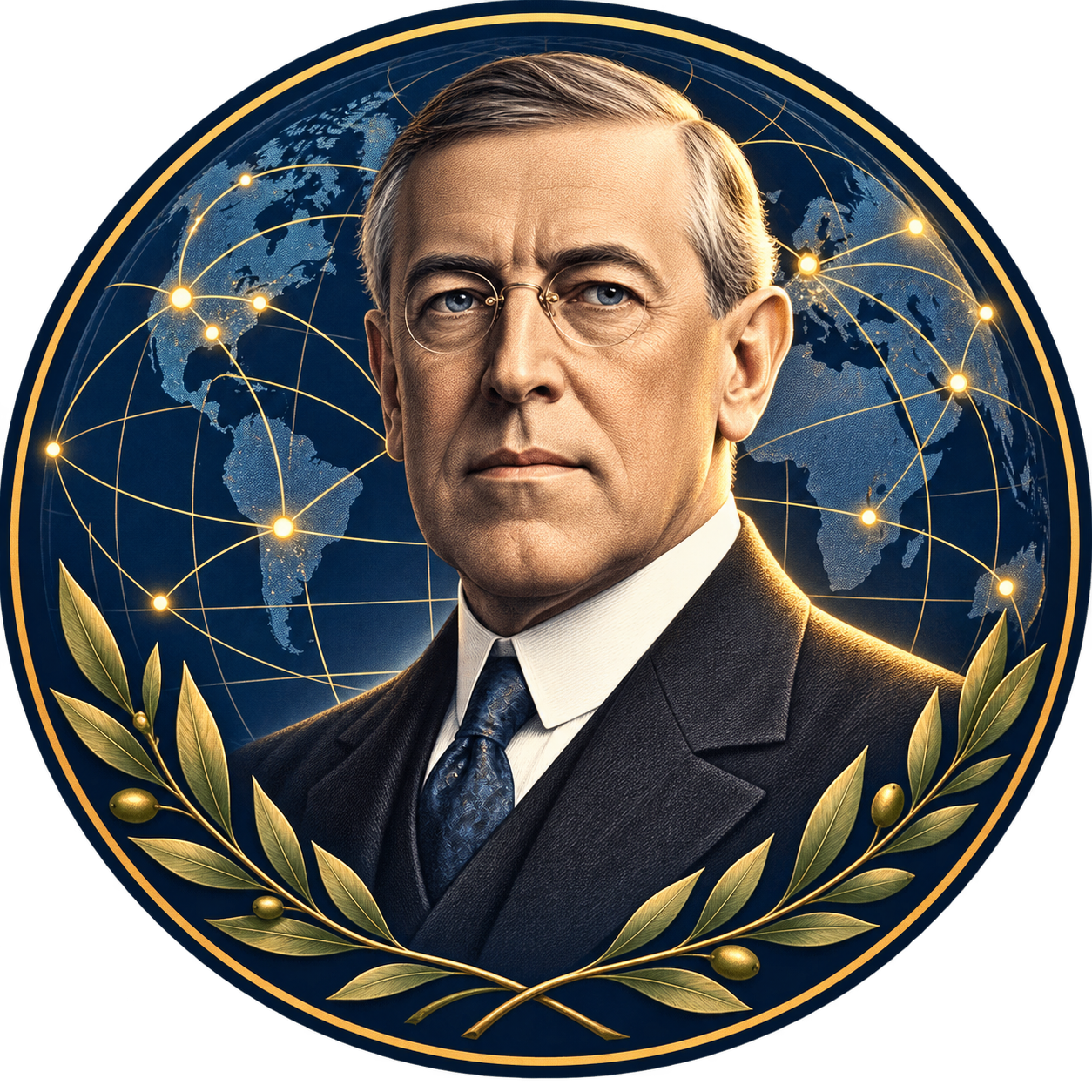
The claim that Woodrow Wilson and Franklin Roosevelt “gave us” the world wars collapses the difference between aggression and resistance. The calendar alone disproves it.
World War I was already three years old.
War erupted in Europe in the summer of 1914. The United States did not enter until April 1917. Wilson spent nearly three years trying to keep the country out before Germany resumed unrestricted submarine warfare, American ships were attacked, and the Zimmermann Telegram revealed a German proposal for an alliance with Mexico against the United States.
Whatever one thinks of Wilson’s decision—and serious debate is warranted—he did not create the conflict. He asked Congress to respond to a war already consuming Europe and increasingly threatening American lives and security.
World War II reached America at Pearl Harbor.
The European war began in September 1939, more than two years before the United States entered. America declared war only after Japan’s attack on Pearl Harbor on December 7, 1941. Roosevelt addressed Congress the next day; Congress made the constitutional decision to declare war.
To say Roosevelt “gave us” World War II is to transfer responsibility from the Axis governments that launched wars of conquest to the democratic coalition that ultimately stopped them.
Leadership is not measured by whether danger appears during a presidency. It is measured by what a president builds to meet it.
The wars were won through coalition power.
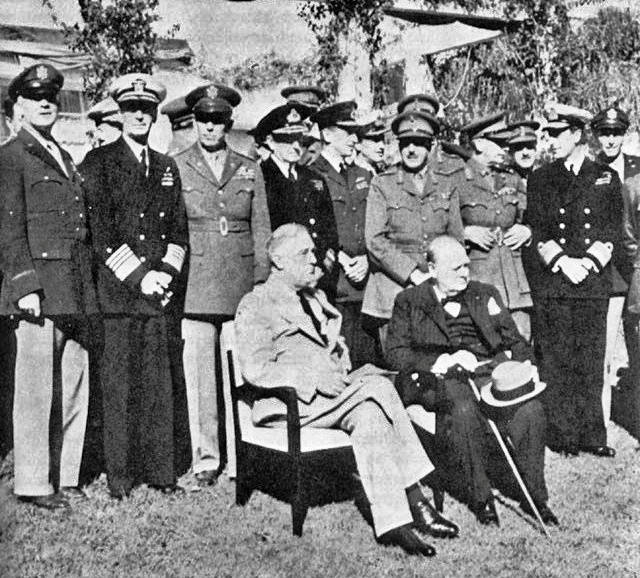
Neither victory was an American solo performance. In the First World War, American manpower and industry reinforced nations that had already borne years of combat. In the Second, Roosevelt’s relationship with Winston Churchill, Lend-Lease, the Atlantic Charter, and the wider Allied coalition turned shared purpose into overwhelming capacity.
That is the lesson isolationism tries to erase: alliances do not dilute American power. They multiply it. Trusted partners contribute troops, intelligence, industrial capacity, geography, legitimacy, and endurance that no nation can manufacture alone.
The revealing contradiction.
A political movement cannot coherently praise Wilson and Roosevelt as “great” while blaming them for wars begun by foreign aggressors. But the deeper issue is not a ranking chart. It is whether history will be used to understand power or flattened into a grievance.
Wilsonianism rejects the fantasy that strength means standing alone, insulting partners, and confusing personal dominance with national leadership. Durable strength is the ability to organize free nations around a common purpose—and to leave behind institutions capable of preserving what sacrifice secured.
The hypocrisy is no longer historical.
Ukraine did not invade Russia. Russia launched the full-scale invasion that opened the largest war in Europe since 1945. Yet Trumpist loyalists repeatedly shift responsibility from the aggressor to the country defending itself and the coalition helping it survive.
Iran presents the opposite case. On February 28, 2026, President Trump ordered Operation Epic Fury, and American and Israeli forces launched attacks inside Iran. That is not an inference supplied by an opponent: the administration’s own Defense Department fact sheet says the operation began “at the direction of the President,” while the White House says Trump ordered the joint force to execute it.
A movement that promised to end “forever wars” opened a new theater. The consequences are strategic, not rhetorical. A shipping lane that had remained open became a battlefield: Iran closed or contested the Strait of Hormuz, and even after mines were cleared, commercial transit required military protection while a naval blockade remained in place. What had been ordinary commerce became a continuing military commitment.
The campaign has also consumed weapons needed elsewhere. Current reporting describes deep pressure on American stocks of long-range precision missiles and air-defense interceptors, raising concern about readiness in Europe and the Indo-Pacific. Every missile diverted to an elective war is one less available to deter another adversary or support an ally already under attack.
Opening a new front, militarizing a vital trade route, and draining the arsenal is not “peace through strength.” It is overextension marketed as dominance.
The responsibility belongs to identifiable decision-makers: the president who ordered the campaign, the officials who executed it, and the advocates who pressed for escalation. It should not be assigned vaguely to Americans who support Israel, Jewish Americans, or any other broad group. Precision in assigning responsibility is part of telling the truth.
The honest verdict: Wilson and Roosevelt did not give America the world wars. They led America into coalitions that helped win them.
Primary & official sources
U.S. Department of StateU.S. Entry into World War I, 1917 ↗National ArchivesJoint Address Leading to War Against Japan ↗National ArchivesDocuments Related to FDR and Churchill ↗United NationsGeneral Assembly Record on Russia’s Invasion of Ukraine ↗U.S. Department of DefenseOperation Epic Fury Fact Sheet ↗The White HouseAdministration Account of the Iran Campaign ↗Associated PressSix Months of the Iran War ↗The Wall Street JournalMunitions Drain and Global Readiness ↗