
Americans wake each morning inside an inheritance so successful that it feels like nature. The lights turn on. Markets open. Ships cross oceans. Elections occur. Most citizens go about their lives without imagining an army crossing their town, a missile striking their workplace, or a foreign blockade determining whether their business survives.
That normality is one of the greatest achievements in American history. It is also dangerous when mistaken for something automatic. Peace, freedom, and liberty are not permanent features of the landscape. They are conditions created by geography, constitutional government, economic capacity, military sacrifice, credible deterrence, and relationships with other nations. Every generation inherits them. Every generation can also spend them.
Peace is not the absence of statecraft. Peace is what successful statecraft makes possible.
Geography gave America time—not immunity.
The United States occupies an extraordinary strategic position: friendly neighbors, vast internal resources, access to two great oceans, and immense distance from most historic centers of military power. For much of the nation’s history, moving an invading army across those oceans was nearly impossible. Geography gave Americans room to develop institutions, industry, and wealth while other societies repeatedly fought on their own soil.
But geography was always an advantage rather than a guarantee. Submarines, long-range aircraft, Pearl Harbor, intercontinental missiles, and nuclear weapons progressively reduced the protection supplied by distance. Today cyber operations can cross an ocean instantly. Satellites connect communications, navigation, finance, and war. A disruption in one narrow shipping lane can alter energy prices across the world. A factory shutdown abroad can stop production in an American town.
The moat has become a network. That network can multiply American power when it is resilient and supported by trusted partners. It can transmit danger just as efficiently when critical technologies, shipping routes, alliances, or financial systems are allowed to fail.
War spends the liberty it promises to defend.
War is the gravest matter of state because it consumes the lives, wealth, attention, and freedom of a people. It brings conscription or prolonged deployments, emergency authority, censorship, surveillance, debt, bereavement, and decisions that cannot be reversed. Sometimes those sacrifices are necessary to resist conquest or defend the republic. Their necessity does not make them small.
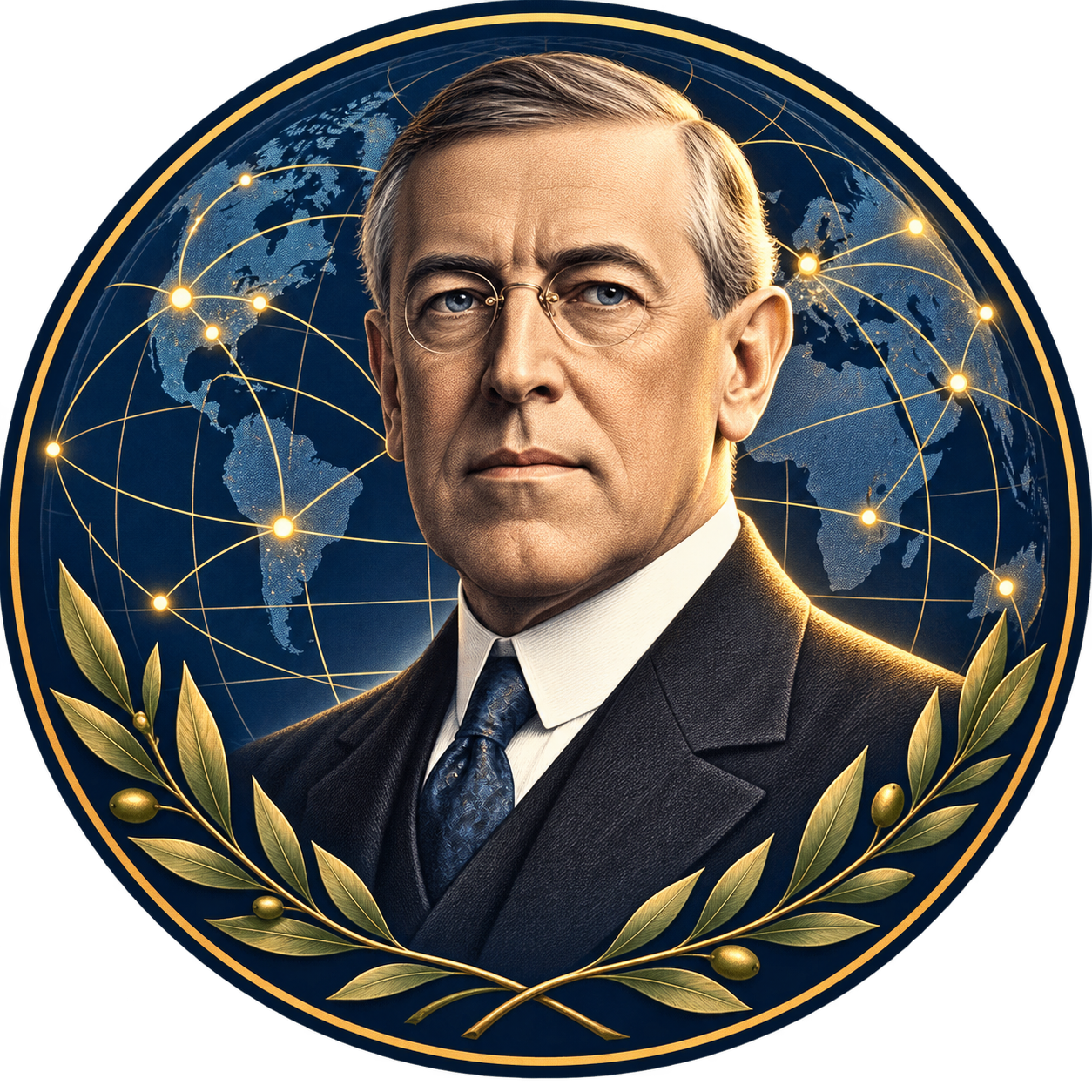
Woodrow Wilson’s own presidency supplies a warning. He articulated a durable vision of collective security and a peace based on something more than temporary balances of power. Yet during war his administration also tolerated grave violations of civil liberty, including prosecutions of dissent under the Espionage and Sedition Acts. A doctrine serious about peace must learn from that contradiction. The state must be strong enough to defend liberty without becoming careless with liberty in the act of defending it.
The proper measure of leadership is therefore not how eagerly a president uses force. It is whether the president builds enough strength, legitimacy, and cooperation to make force less necessary—and whether any force that becomes necessary serves a defined and achievable political purpose.
Wilson supplied an unfinished architecture.
Wilson did not invent international cooperation, self-determination, or collective security. Nor did he apply those principles consistently. His interventions in Latin America and Haiti, racial record at home, and suppression of dissent remain serious failures. But his Fourteen Points assembled a consequential argument: open diplomacy, reduced barriers to trade, arms restraint, a greater place for national self-determination, and a standing association of nations able to defend the political independence of large and small states.
The United States then declined to join the League of Nations. Wilson’s rigidity, the flaws of the Versailles settlement, partisan hostility, and legitimate constitutional concerns all contributed. The League proved unable to stop later aggression. That failure is often treated as the defeat of internationalism. A better reading is that collective security without sufficient power, participation, political legitimacy, and practical design was incomplete.
After a second world war, later leaders returned to the problem with harder experience. Franklin Roosevelt’s administration sought bipartisan support for the United Nations and avoided some of Wilson’s errors in presenting the institution to the Senate. The postwar order added the Marshall Plan, Bretton Woods institutions, a trading system, forward military commitments, and NATO. These were not copies of Wilson’s proposal. They were a more pragmatic construction built from some recognizably Wilsonian materials.
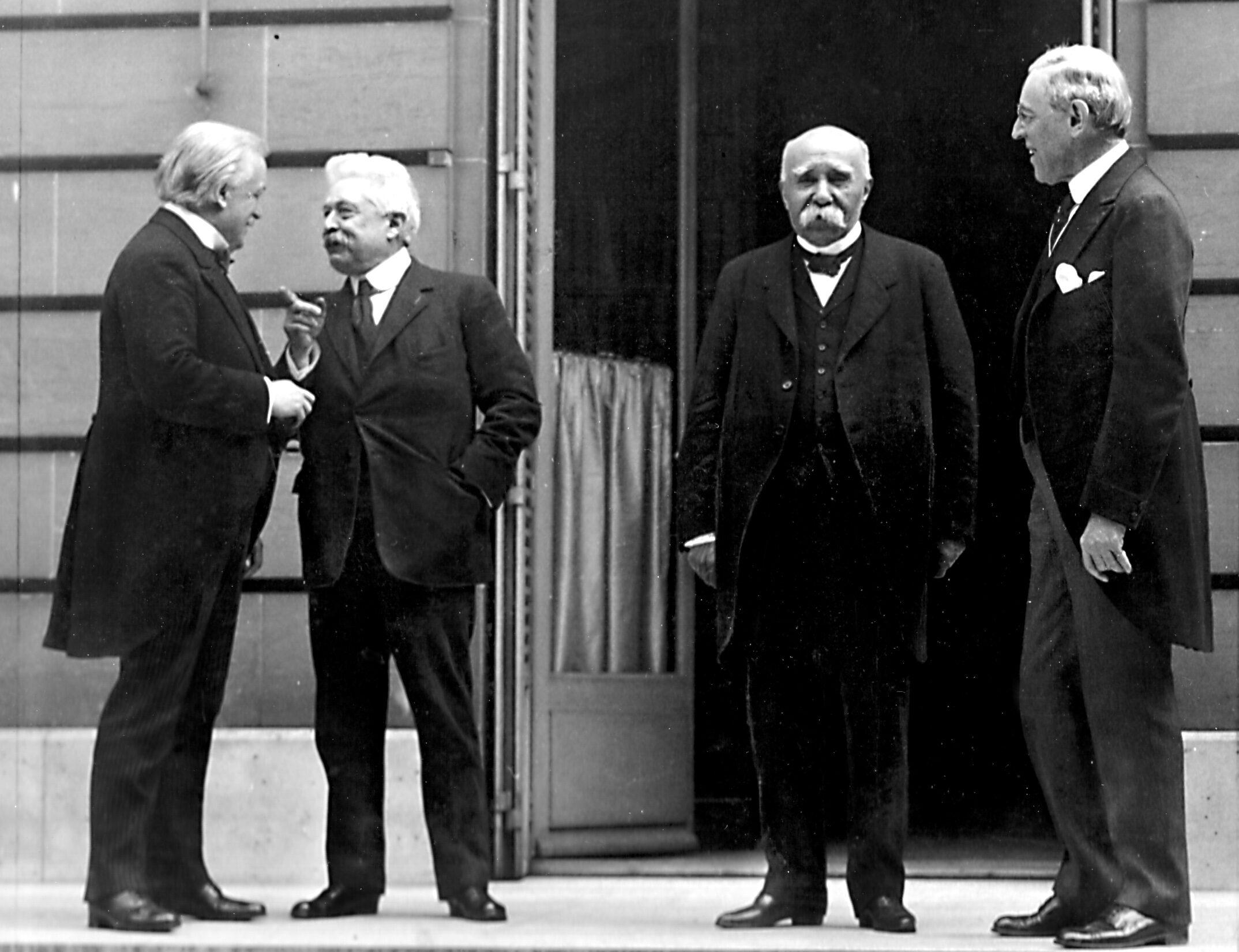
Wilson did not build Pax Americana. He helped supply the vocabulary from which later statesmen built it.
The American century was built by a coalition.
The prosperity of the twentieth century cannot honestly be credited to one president. The Roaring Twenties grew from industrial capacity, wartime finance, productivity, new technology, consumer credit, and global demand—and ended in catastrophe. The more durable achievement followed 1945, when the United States and its partners constructed institutions that joined power to rules, recovery, and reciprocal commitment.
The Marshall Plan helped revive Western European economies and markets. Bretton Woods created structures for monetary cooperation and reconstruction. The General Agreement on Tariffs and Trade reduced barriers within an expanding economic order. NATO made clear that aggression against one member would confront a coalition. The United States benefited enormously, but it did not act alone. Allies supplied territory, forces, intelligence, legitimacy, commerce, and political endurance.
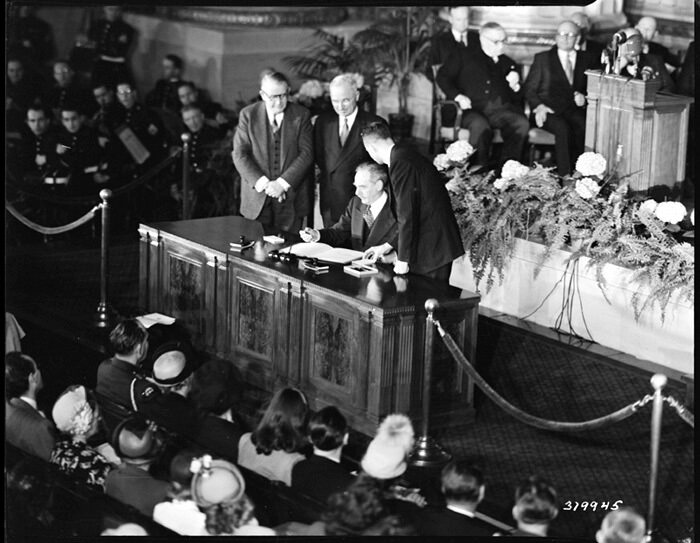
This system was neither innocent nor uniformly peaceful. America fought costly wars, supported dictators, participated in coups, and sometimes violated the self-determination it professed. The phrase Pax Americana must therefore be used with humility. Its real achievement was narrower but still extraordinary: no direct war between the major powers inside the alliance system, a widening zone of democratic security, and an environment in which trade and innovation could generate immense prosperity.
Wilsonianism and Sun Tzu meet before the battle.
Sun Tzu and Wilson do not offer the same philosophy. The Art of War is a strategic text concerned with calculation, position, intelligence, deception, economy of force, and the avoidance of prolonged war. Wilsonianism is a political tradition concerned with legitimacy, open diplomacy, self-determination, collective security, and institutions among states.
The parallel is nevertheless powerful. Both direct attention away from the spectacle of battle and toward the conditions that determine whether battle is required. Sun Tzu’s strategist tries to break resistance and secure objectives before costly fighting. A capable Wilsonian order tries to make aggression irrational by confronting it with allied strength, economic consequence, political isolation, and a legitimate alternative to conquest.
Alliances are therefore not sentimental friendships. They are strategic depth. International institutions are not substitutes for power. At their best, they coordinate power, establish expectations, expose aggression, organize sanctions, distribute burdens, and provide peaceful exits from crises. Legitimacy is not decoration. It affects whether other nations share intelligence, enforce restrictions, host forces, sustain costs, and remain beside America when a crisis lasts longer than expected.
The shared lesson is simple: the highest form of strength is not maximum violence. It is maximum influence at the minimum necessary cost.
Taiwan reveals how small the world has become.
An invasion or blockade of Taiwan would not remain a distant Asian event. Taiwan occupies a central place in advanced semiconductor manufacturing. A major conflict could interrupt chip production and shipping, trigger sanctions and counter-sanctions, raise insurance and energy costs, and force financial markets to reprice political risk. The precise consequences are unknowable, but geographic distance would not insulate American factories, portfolios, retirement accounts, or consumers.

This does not answer every question about American commitments in the Taiwan Strait. It establishes why the question matters at home. Deterrence must combine credible allied military capability with diversified chip production, protected infrastructure, abundant munitions, secure communications, economic resilience, and diplomacy that reduces miscalculation. A slogan is not a strategy. Neither is an empty threat.
Peace requires maintenance.
A modern Wilsonian policy begins with humility about what Americans inherited and discipline about how to preserve it. Maintain capable armed forces without confusing expenditure with readiness. Rebuild the industrial base and munitions stocks needed for credible defense. Invest in artificial intelligence, cyber defense, energy security, shipping, and semiconductors. Strengthen alliances through consultation and shared capacity rather than humiliation. Keep commitments understandable. Preserve diplomatic channels even with adversaries. Resist conquest while refusing the fantasy that every foreign society can be remade by American force.
Above all, remember what national strength is for. It is not a stage on which a leader performs dominance. It is the accumulated capacity of a free people to protect their lives, their constitutional order, their prosperity, and the peace in which ordinary human purposes can flourish.
The Wilsonian position: peace is inherited infrastructure. Preserve it by making aggression look futile, cooperation look profitable, and war the least attractive option available.
Public record & further reading
U.S. Department of StateWilson’s Fourteen Points, 1918 ↗U.S. Department of StateThe League of Nations and the U.S. Debate ↗U.S. Department of StateThe Formation of the United Nations ↗U.S. Department of StateBretton Woods and the Postwar Trading Order ↗U.S. Department of StateThe Marshall Plan, 1948 ↗U.S. Department of StateThe Creation of NATO, 1949 ↗Project GutenbergSun Tzu, The Art of War, trans. Lionel Giles ↗Air University PressCommentary on Deterrence and Conflict over Taiwan ↗