

The matching tie is funny because it makes political conformity visible. A peculiar crimson—neither quite flag red nor ordinary burgundy—appears again and again around Donald Trump. It resembles a uniform for a court that insists it is a republic.
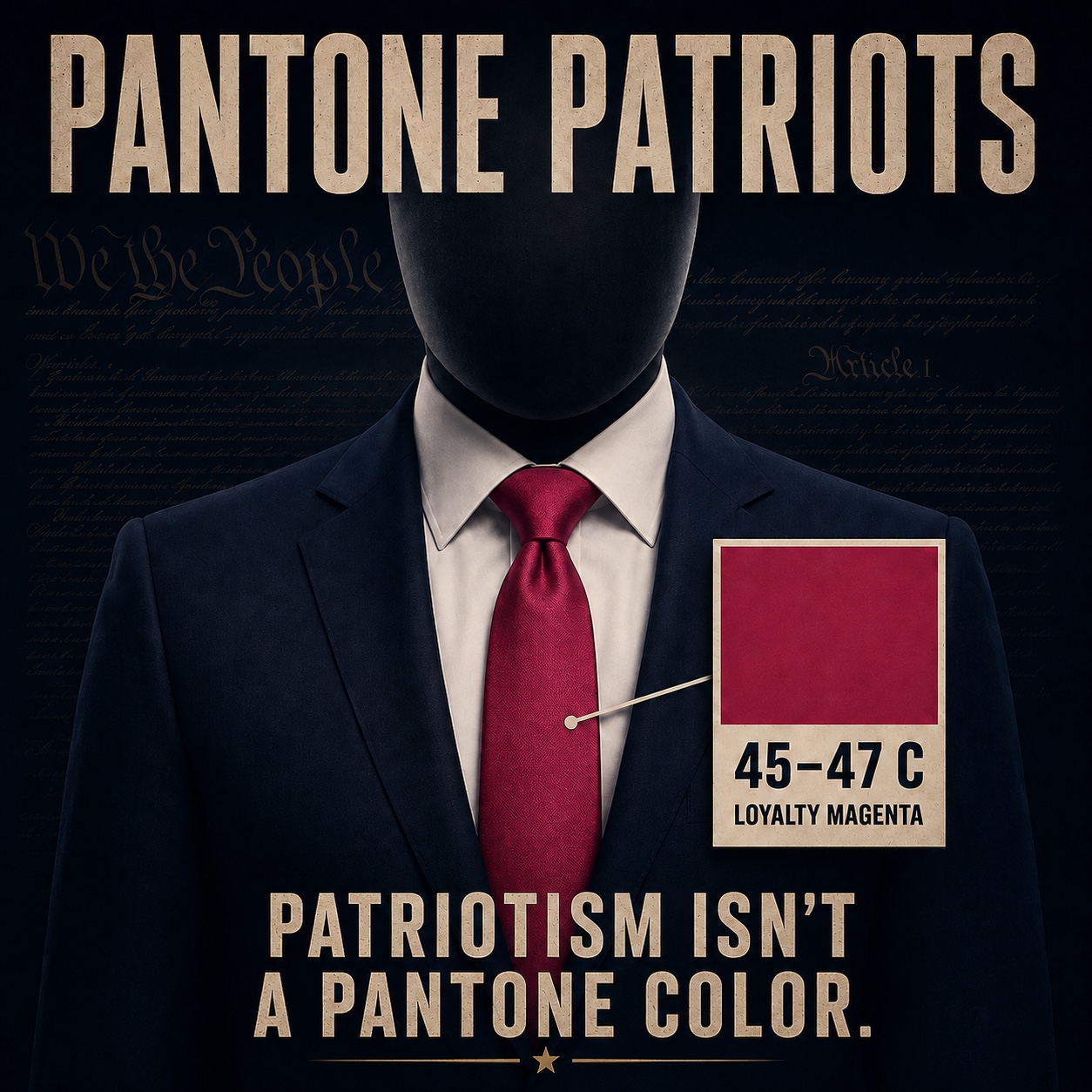
Call it 45–47 C: Loyalty Magenta. The number and name are fictional satire, not a real Pantone designation. But the joke points to something serious. American patriotism is increasingly confused with adherence to a political culture: wear the color, repeat the phrases, admire the leader, despise the designated enemies, and never embarrass the tribe by applying its principles consistently.
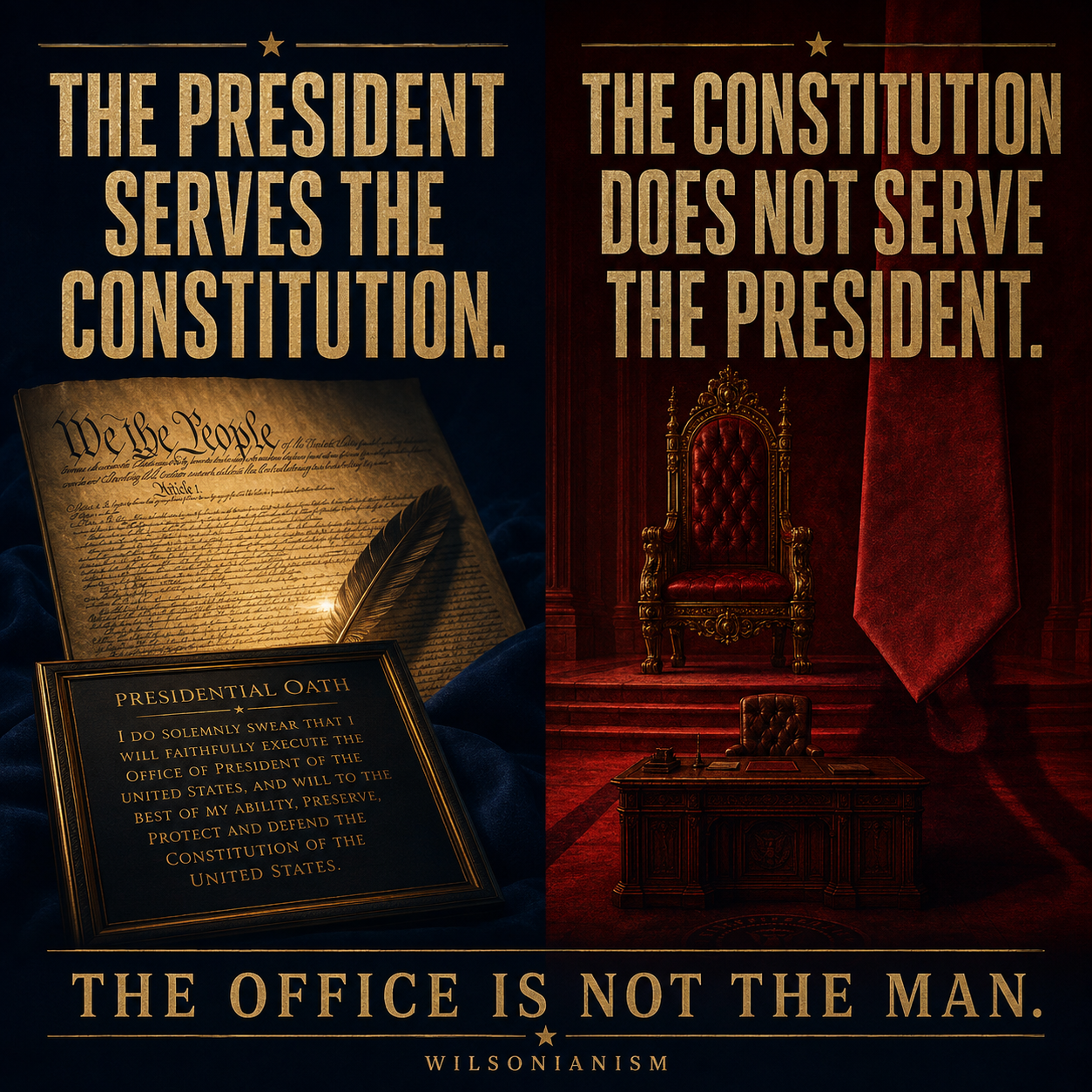
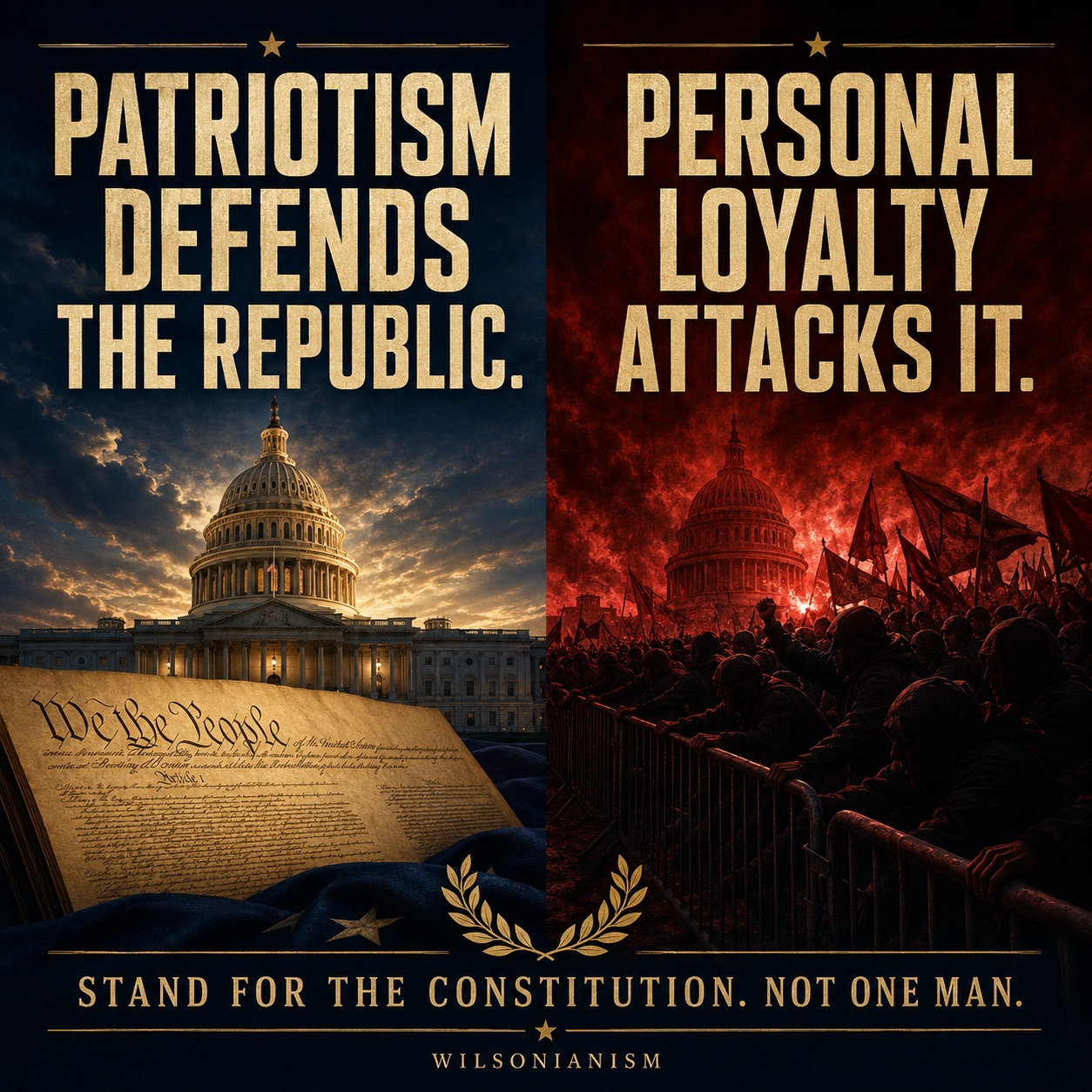
Patriotism is not loyalty to the man. It is loyalty to the Constitution that limits the man.
The president is not the country.
The Constitution does not ask public officials to swear personal allegiance to a president. The presidential oath itself requires the president to “preserve, protect and defend the Constitution.” Members of Congress, judges, and state and federal officers are likewise bound by oath or affirmation to support the Constitution. The document makes the hierarchy unmistakable: the officeholder serves under the law; the law does not serve under the officeholder.
That distinction is the heart of a republic. A king may demand fidelity to his person. A constitutional president possesses delegated authority, divided among institutions, limited in duration, and answerable to law. He is entitled to cooperation within his lawful authority. He is not entitled to personal submission.
Read the Constitution’s oath and supremacy provisions at the National Archives ↗
A culture can become an oath without words.
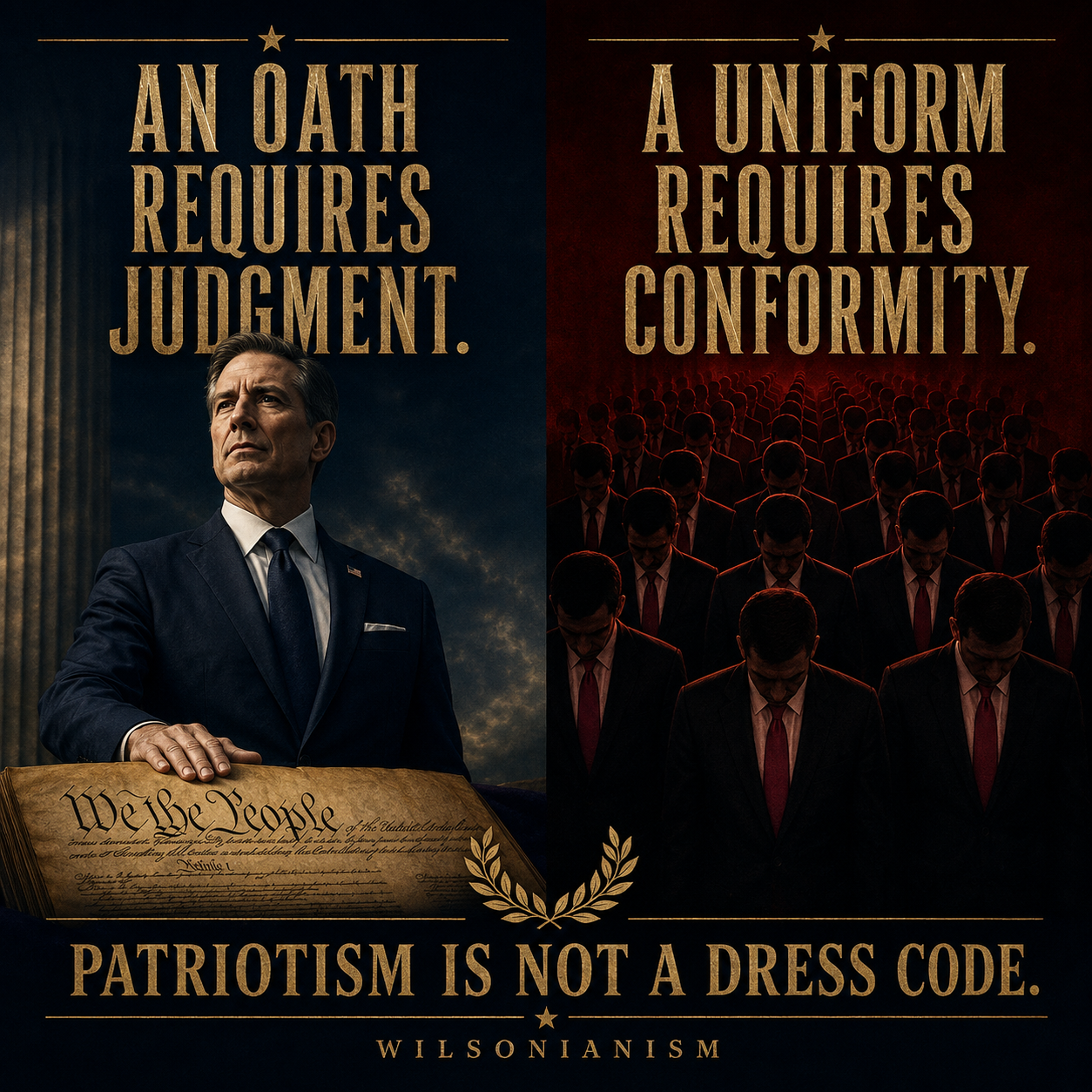
Political conformity rarely announces itself as surrender. It presents itself as teamwork, toughness, authenticity, or loyalty. Its rituals can be trivial: the tie, the hat, the vocabulary, the theatrical outrage. Yet rituals identify who belongs, who must imitate, and who risks exile by dissenting.
The clothing alone proves nothing about any individual, and similar ties are common throughout American politics. “Pantone Patriots” is not a claim that a wardrobe reveals a secret conspiracy. It is a name for a broader moral failure: allowing the aesthetics of patriotism to replace the obligations of citizenship.
The simplest test is reversibility.
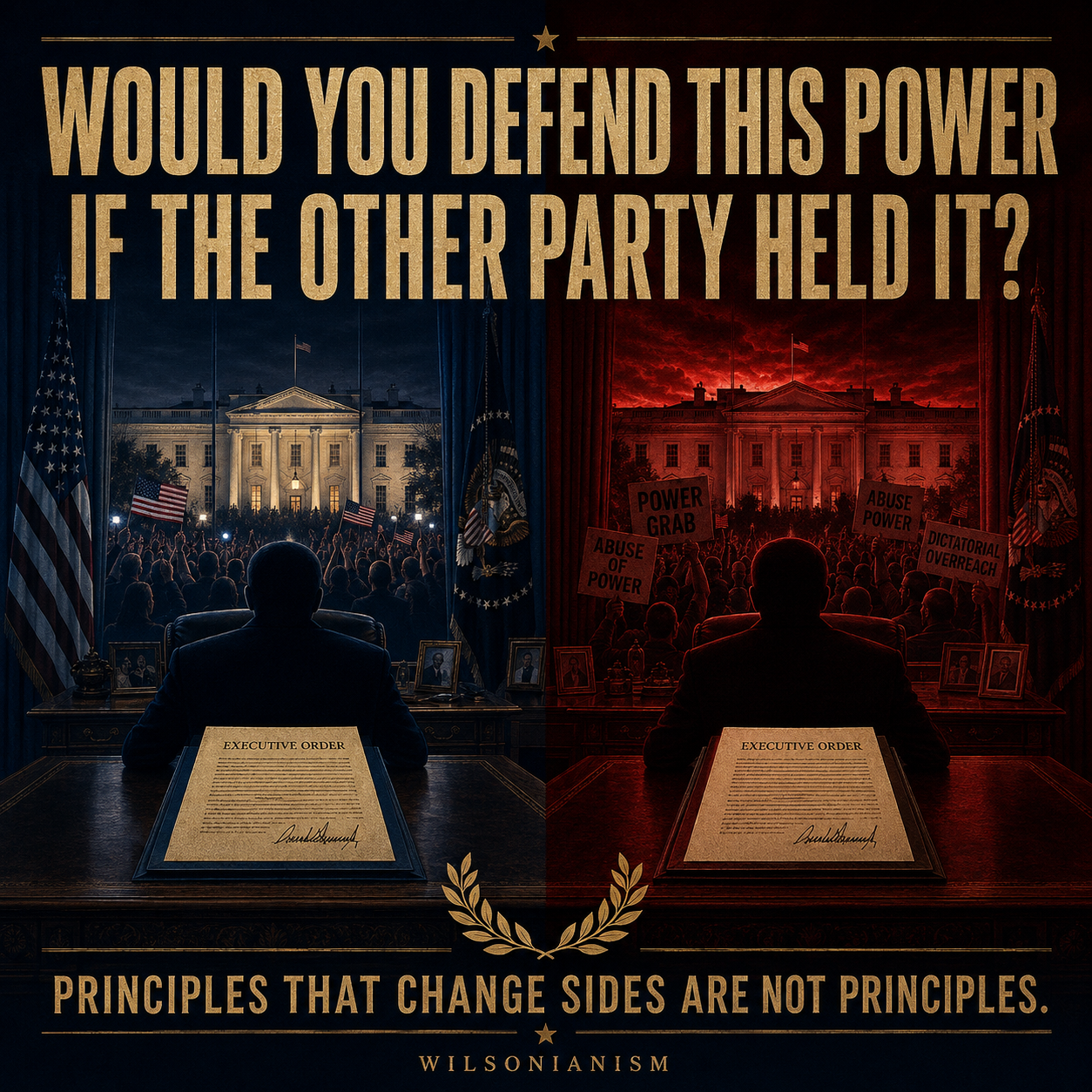
Would you defend the same presidential power if the other party held the office? Would you excuse the same refusal to obey a court? The same use of public authority for private retaliation? The same demand that an official place personal loyalty above an independent duty? The same effort to make an election legitimate only when your side wins?
If the answer changes with the identity of the president, the governing principle is not constitutionalism. It is faction. George Washington warned in his Farewell Address that the spirit of party could place the will of a faction above the authority of the nation’s constituted institutions. The danger was not disagreement itself. It was the conversion of public power into an instrument of partisan domination.
Read Washington’s Farewell Address at Founders Online ↗
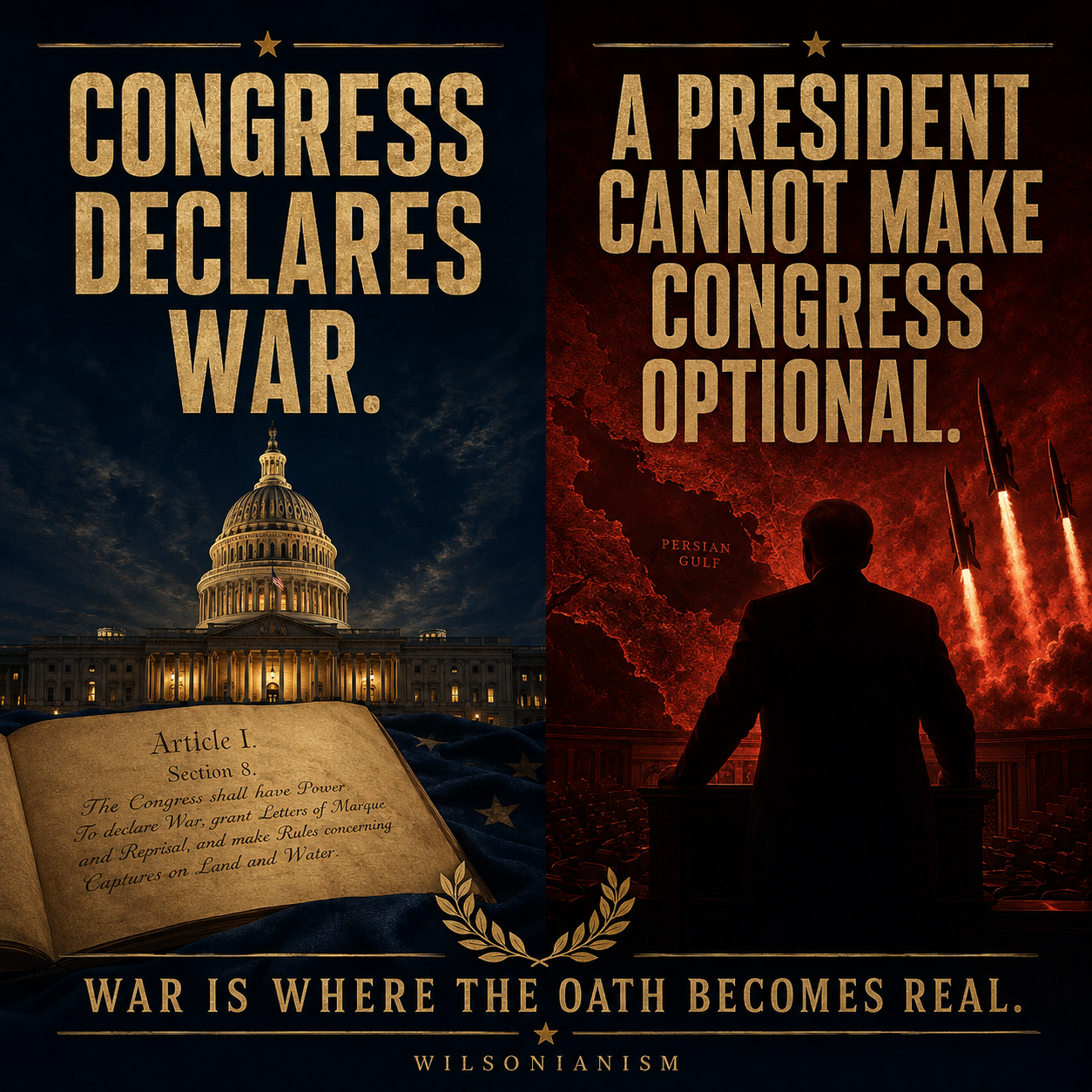
War is where the oath becomes real.
The Constitution assigns Congress—not the president—the power to declare war. Presidents retain authority to repel sudden attacks and protect American forces, and generations of presidents from both parties have stretched that authority. But a sustained war is precisely the kind of irreversible national commitment the Constitution was designed to prevent one person from making alone.
The Iran conflict makes the failure visible. President Trump initiated military action against Iran on February 28, 2026 without a declaration of war or specific statutory authorization. He reported the action under the War Powers Resolution, but Congress did not enact the proposed authorization before the law’s sixty-day period expired. The administration then argued that a ceasefire had terminated “hostilities,” even as a naval blockade and later rounds of strikes continued.
In July, the House finally passed a concurrent resolution directing the president to remove American forces from hostilities with Iran unless Congress explicitly authorized them. That vote was a meaningful assertion of legislative responsibility. But the larger record remains damning: American service members were fighting and dying while many self-described constitutional conservatives treated Congress’s war power as optional because the president belonged to their party.
If Congress will not defend its power when its own president wages war, its members are loyal to a party before they are loyal to the Constitution.
Read the proposed 2026 Iran authorization and its statement that no authorization had been enacted ↗ Read the House-passed termination resolution ↗
An election cannot be sacred only when your candidate wins.
The peaceful transfer of power is not a ceremony performed after the real constitutional work is finished. It is the proof that political authority belongs to the people rather than the incumbent.
On January 6, 2021, a mob attacked the Capitol while Congress counted certified electoral votes. After lawmakers returned to the chambers, 147 Republicans still voted to sustain objections to at least one state’s electoral votes. Not every objection had the same motive, and members possessed a procedural right to cast those votes. But the effort sought to discard certified votes without evidence capable of changing the result after courts, state officials, and election administrators had rejected the underlying claims.
The constitutional test was simple: would those members have accepted a Democratic Congress refusing electoral votes for a Republican winner on comparable grounds? A republic cannot survive if electoral legitimacy depends on whether the leader approves of the result.
Read the January 6 Congressional Record ↗
“Law and order” cannot mean immunity for the loyal.
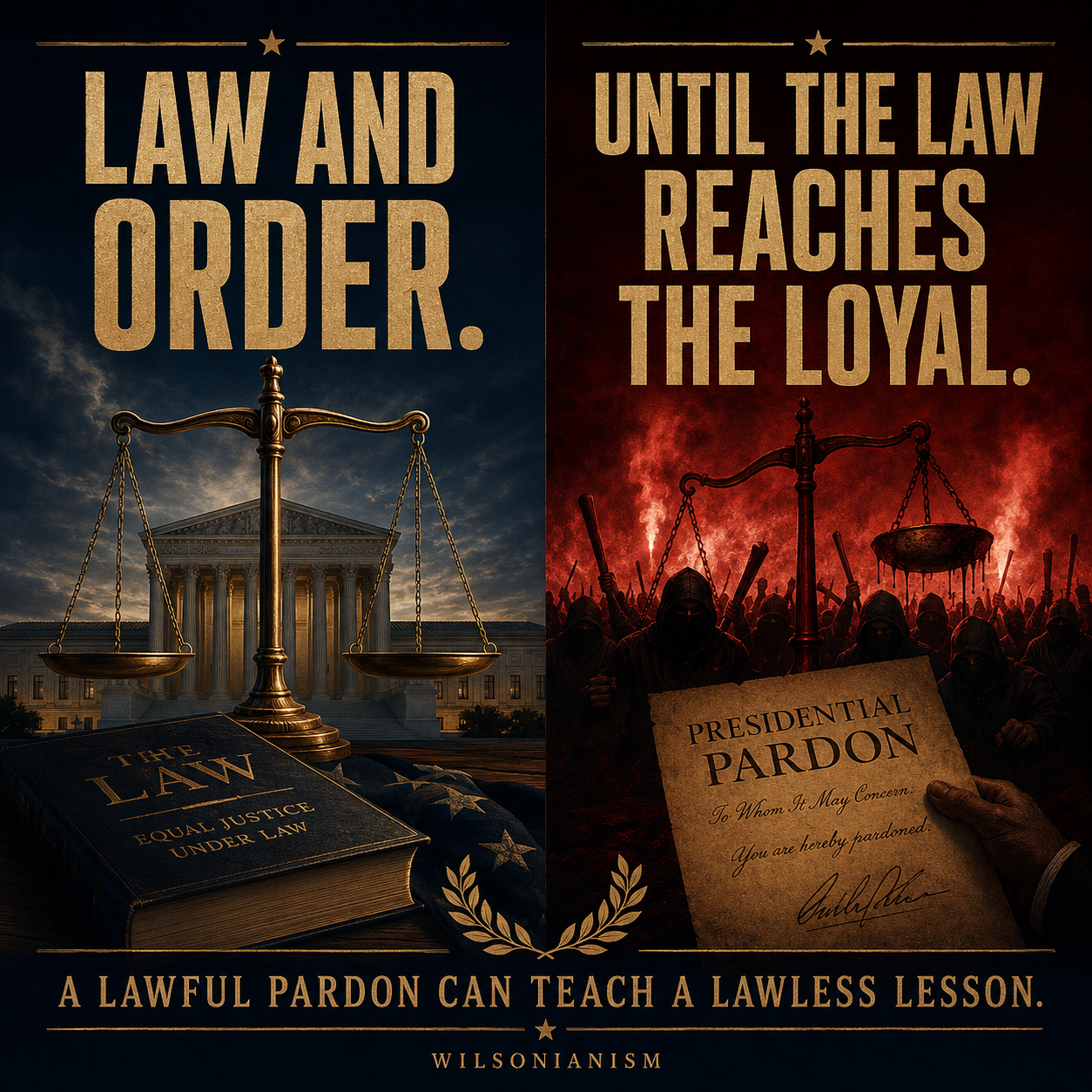
On returning to office in 2025, Trump commuted fourteen January 6 sentences and granted sweeping pardons to all other people convicted of offenses related to the attack. The pardon power is explicitly constitutional. Calling the pardons unconstitutional would therefore miss the point.
The constitutional culture surrounding them is the issue. A movement that condemns disorder, demands severe punishment, and treats attacks on police as intolerable made an exception for people whose crimes were committed in service of its leader. A lawful power can still be used to teach a lawless lesson: loyalty to the leader places you inside the circle of mercy; opposition places you outside it.
Read the January 20, 2025 clemency proclamation ↗
The First Amendment does not protect only friendly lawyers.
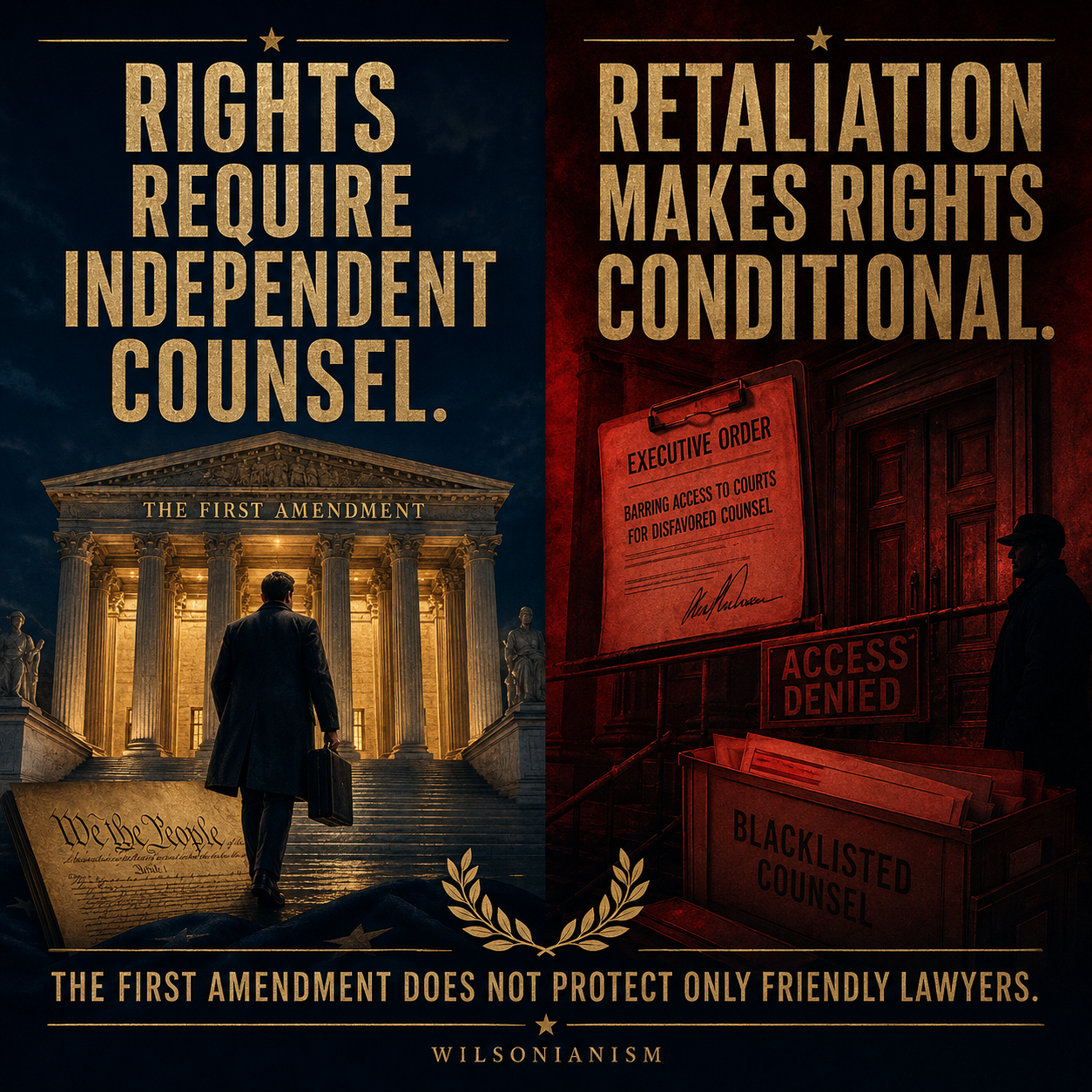
In 2025, Trump issued executive orders imposing federal penalties on law firms associated with clients, lawyers, or causes he opposed. In the Perkins Coie case, a federal district court declared the order unlawful, null, and void because it violated the First, Fifth, and Sixth Amendments. Other targeted firms also won relief.
This was not merely a disagreement over legal policy. An independent bar is part of the machinery through which constitutional rights become real. If lawyers risk government punishment for representing the president’s opponents, the right to counsel exists only at the pleasure of the person it is supposed to restrain.
Read the final order in Perkins Coie LLP v. Department of Justice ↗
Watchdogs are not disloyal because they watch.
Trump removed a group of inspectors general in January 2025 without giving Congress the thirty days’ notice and substantive, case-specific reasons required by the Inspector General Act. A federal judge later concluded that the removals violated the law, although she declined to reinstate the officials because the president could remove them again after following the required process.
Inspectors general are designed to expose waste, misconduct, and abuse inside the executive branch. Their institutional purpose requires independence from the officials they investigate. Treating that independence as personal disloyalty reverses the constitutional relationship: the watchdog becomes accountable to the ruler rather than the government becoming accountable to the public.
Read the court’s opinion in Storch v. Hegseth ↗

Real loyalty sometimes requires refusal.
A constitutional officer should help a president execute lawful policy vigorously. That same officer must also be prepared to say no—to unlawful orders, corrupt demands, fabricated claims, attacks on protected rights, and efforts to make personal interest the measure of public duty.
This is not disloyalty to the presidency. It is loyalty to what makes a presidency legitimate. Constitutional restraints do not weaken elected leadership; they distinguish democratic authority from personal rule.

Pantone patriotism is bipartisan.
Trump’s movement supplies an unusually vivid palette, but the underlying temptation belongs to every faction. Democrats are capable of excusing executive overreach by Democratic presidents. Republicans are capable of discovering constitutional objections only when Democrats govern. Activists of any ideology can decide that norms, speech, federalism, due process, or institutional independence matter only when their coalition benefits.
The remedy is not political neutrality. Citizens should hold strong convictions, organize, persuade, vote, and govern. The remedy is consistency: constitutional principles must continue to bind us when they protect people we dislike and restrain leaders we admire.
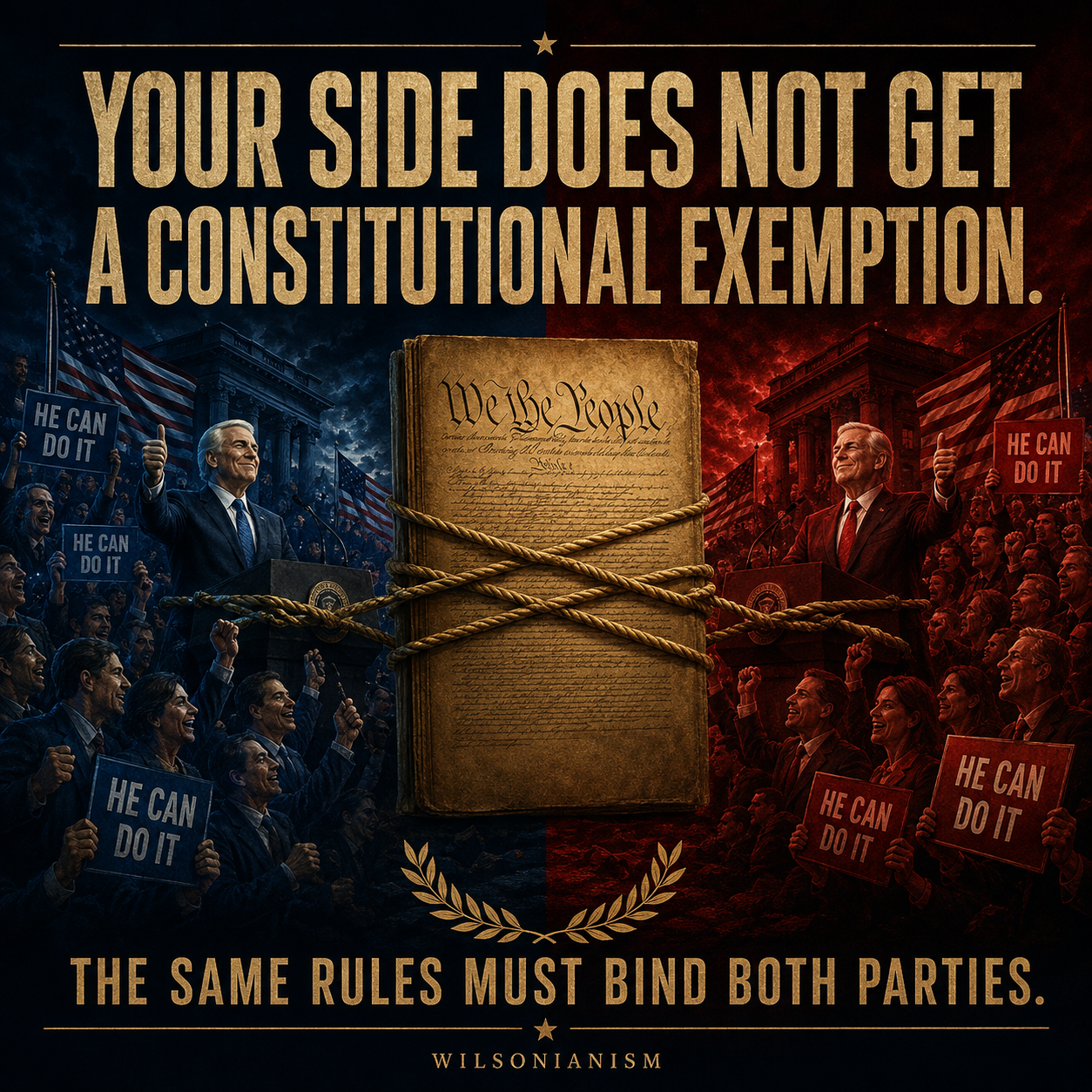
Anyone can defend the Constitution when it produces the outcome they want. Patriotism begins when it does not.
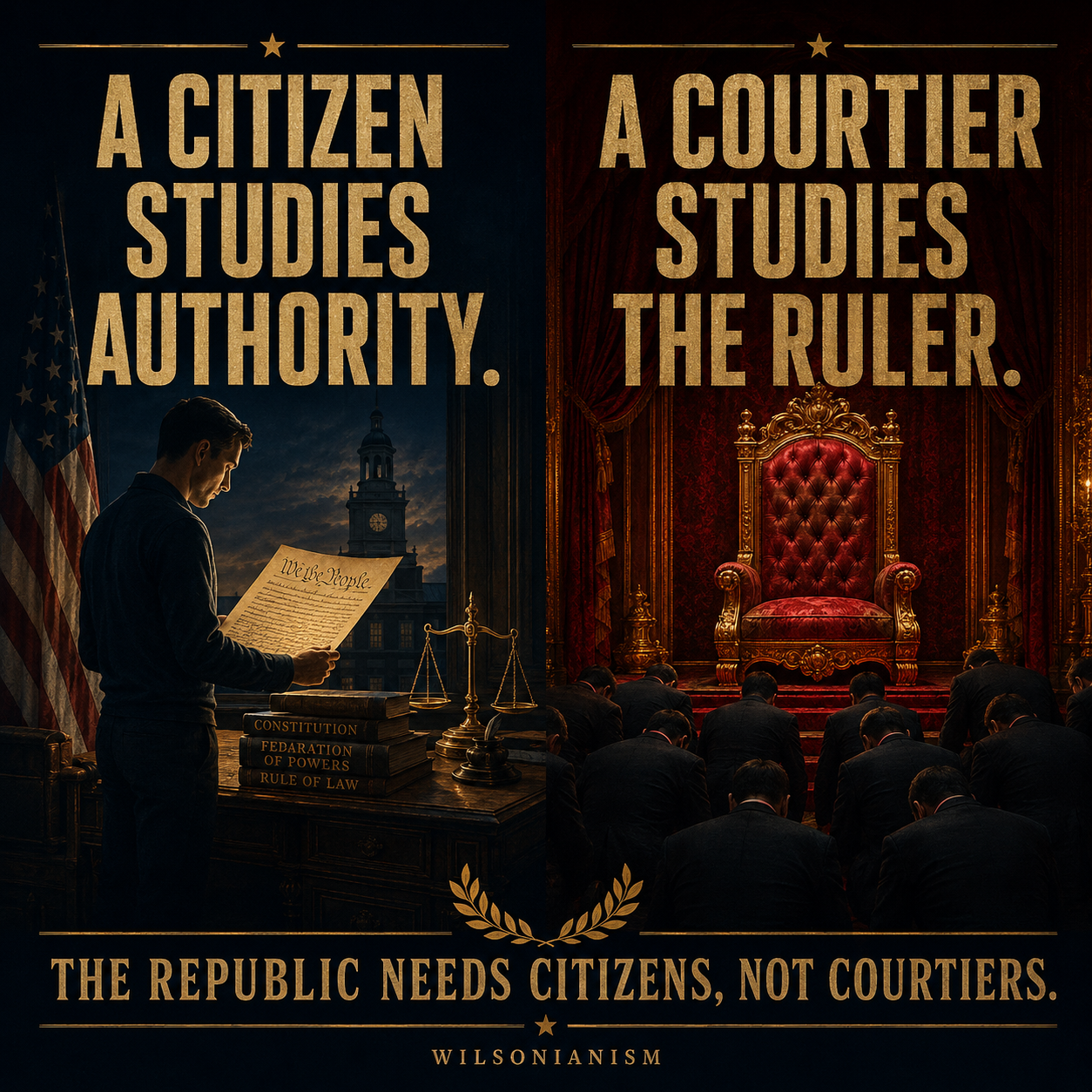
The republic needs citizens, not courtiers.
A courtier studies the ruler’s moods. A citizen studies the ruler’s authority. A courtier treats proximity as honor and dissent as treachery. A citizen understands that temporary officials are entrusted with permanent institutions that belong equally to political allies, political opponents, and generations not yet born.
Wear any tie you like. Join a party. Cheer a president. Argue passionately for his policies. But remember where allegiance ultimately belongs. The Constitution is not scenery behind the leader. It is the source and limit of the leader’s power.
Patriotism isn’t a Pantone color.
Primary sources
- National Archives: Constitution of the United States—transcript
- Founders Online: Washington’s Farewell Address, September 19, 1796
- Congress.gov Constitution Annotated: The Presidential Oath of Office
- Congress: proposed 2026 Authorization for Use of Military Force Against Iran
- Congress: House-passed resolution directing the removal of forces from Iran hostilities
- Congressional Record: electoral-vote proceedings of January 6, 2021
- White House: January 6 clemency proclamation
- U.S. District Court: final order in Perkins Coie LLP v. Department of Justice
- U.S. District Court: opinion in Storch v. Hegseth
- Wikimedia Commons: official White House photograph and public-domain record